

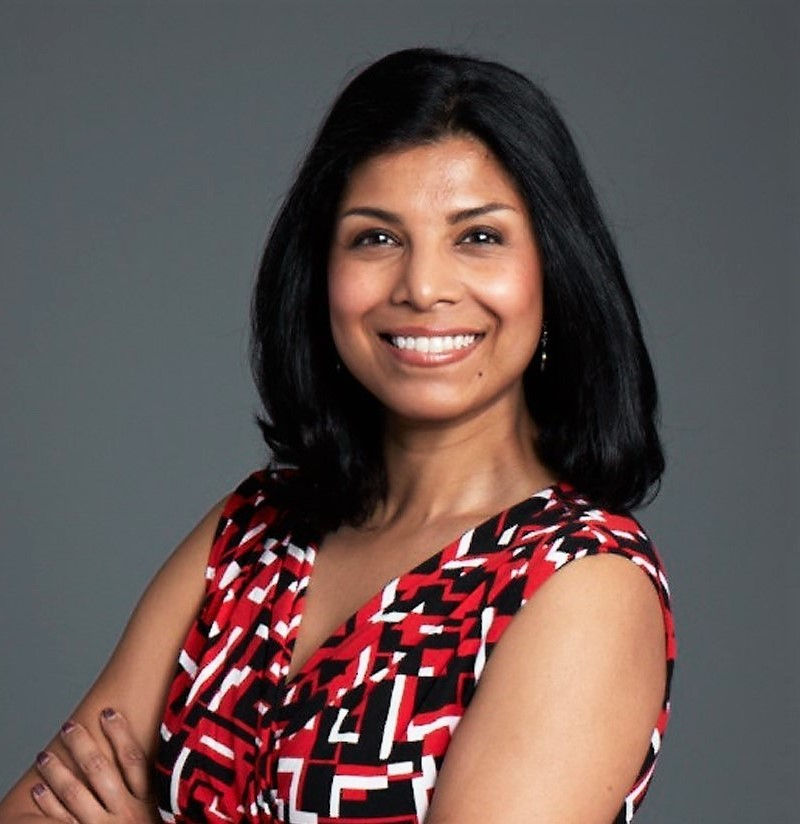
Dr. Lipi Roy: Rethinking Addiction Care
By Jamelia Hand MHS CADC CODP I
We were both in tears…
That’s what happened when Dr. Lipi Roy described the moment she told me about Janet. And honestly, I understood immediately why.
Janet wasn’t who people expect when they hear a story about addiction. By the time Dr. Roy met her, she was in recovery from opioid use disorder/heroin. She had been a nurse and had lost her license during her addiction. She was also doing the work to rebuild her life. She had completed treatment for Hepatitis C and she was working toward becoming a counselor or peer support professional. She was showing up, trying, doing everything we say we want people to do.
But her son was struggling.
As Dr. Roy told it, Janet would come in and talk about him. You could hear it in her voice. The worry, the exhaustion, the fear that sits just under the surface when someone you love is not okay and you don’t know what else to do.
At one point, she made a decision that no parent ever wants to make. She called the police.
Her son was furious. He looked at her and said, “How could you do this to me? You’re my mother.”
And Janet said something that has stayed with Dr. Roy all these years. She told him, “I would rather see you in cuffs than a coffin.”
When you hear that, you realize this isn’t just about one family. It’s about what options families actually have when someone they love is in danger. It’s about what our systems offer, and what they don’t.
A few months later, Janet missed some appointments. The team tried to reach her. When she finally came back, she apologized and explained that she hadn’t been able to come in because she had buried her son.
He was 20 years old.
Dr. Roy said it still feels like yesterday when she talks about it.
Before the Story: How Trust Is Built in the First Few Minutes
Before we ever got to Janet, something else happened first, and it matters more than most people realize.
We connected as people.
We talked about the weather. My home town of Chicago and New York both finally getting a break from winter. We laughed a little. I told her about my love for flowers and how that came after losing my father (a florist) to an overdose. She met that moment with compassion, shared her own experience of losing her father, and immediately made it clear that this was a space without judgment.
That exchange for most would be considered small talk, but it wasn't. I could instantly see how she builds genuine rapport with her patients.
And in this field, rapport is not a soft skill, it is a clinical skill.
What Dr. Roy demonstrated in those first few minutes is something many organizations struggle to operationalize but absolutely need to. Patients are constantly assessing whether they feel safe, whether they are going to be judged, and whether it is worth telling the truth. That decision often happens early, sometimes before a single clinical question is asked.
When a patient does not feel safe, they edit their story. They withhold. They minimize. They give you just enough to get through the visit. Then, we build treatment plans on incomplete information and wonder why engagement drops off.
When a patient does feel safe, everything changes. They tell you what is actually going on. They share what matters to them. They become part of the process instead of someone being managed through it.
That is where treatment really begins.
What stood out to me about Dr. Roy is that this is not performative for her. It is consistent with how she practices. She is not rushing to get to the diagnosis. She is creating the conditions for the patient to reveal it.
And that sets the tone for everything that follows.
Because when a patient feels respected and heard at the start, they are more likely to return, more likely to engage, and more likely to trust the care plan being developed with them. In a field where retention and engagement are ongoing challenges, this is not a “nice to have.” It is foundational.
Before the clinical work, before the treatment plan, before the interventions, there is a decision being made by the patient.
“Is this a place where I can be honest?”
Dr. Roy understands that answer determines everything.
She didn’t set out to do this work
One of the first things Dr. Roy said that stuck with me is that she did not plan to go into addiction medicine. And, according to Dr. Roy, she would have never said that this was where she was headed.
She loves learning and that came through clearly. She talked about growing up in an immigrant family where education was emphasized as a pathway to opportunity. She studied molecular biology and biotechnology, went on to graduate work in neurophysiology, spent time in pharma, and eventually pursued a dual MD/MPH at Tulane University.
She trained in internal medicine at Duke University Medical Center and built what most people would consider a very strong, traditional medical career path. But the turning point came when she took a role serving Boston’s unhoused population.
About a year into that work, she and her colleagues realized something that shifted everything for her. The leading cause of death among her patients was overdose.
She didn’t describe that moment as a statistic. She described it as something that changed how she saw her role.
She started listening differently.
What she learned by actually listening
She went on to tell me something that I wish more of my clinician clients would say out loud.
She realized she had gaps.
Not small gaps; rather, real gaps in her understanding of addiction, of people living with addiction, and of how stigma shows up in care.
So, she started doing what many people say they do, but fewer actually do consistently.
She listened.
To her patients. To counselors. To colleagues. To the people doing the work every day and, she paid attention to her own language.
She said very plainly that she used to use terms like “addict,” “alcoholic,” and “dirty urine.” Not because she was trying to harm anyone, but because that was the language used around her. It was normalized.
That part is important because we like to think stigma lives somewhere else. It doesn’t. It lives in the everyday language of healthcare.
She made a conscious decision to unlearn that.
Now when a patient says, “I’ve been clean for a year,” she doesn’t correct them in a way that shuts them down. She reframes it. She might say, “You’ve been in recovery for a year.” When someone refers to a test as “dirty,” she shifts it to what it actually is.
She told me that those moments often become turning points. Patients start to see themselves differently, and when that happens, engagement changes.
Her philosophy sounds simple, but it isn’t easy
At one point, I asked her to describe her philosophy.
She took a step back and said something that (on the surface) sounds like something every clinician has heard.
Your patient is your best teacher.
Then she paused and explained what that actually requires.
It means not interrupting them.
It means asking better questions.
It means giving them space to tell their story.
She pointed out that studies have shown physicians often interrupt patients within 14 to 18 seconds. She asked me, “Can you tell your story in 14 seconds?”
Of course not.
That’s the problem.
So, she slows down.
She lets people talk.
She thanks them for coming in, because she knows how much it can take for someone with addiction to even walk through the door.
Then she tells them, “We’re going to work on this together.”
She described herself as a coach. A cheerleader. Someone with training, yes, but still part of a team with the patient, and she meant that.
What she saw at Rikers and beyond
Her career didn’t stay in one lane.
She eventually moved into a role as Chief of Addiction Medicine for New York City’s jail system, including Rikers Island. That is a completely different environment, with its own layers of complexity.
She talked about the steep learning curve. About working with people who were incarcerated, many of whom had experienced trauma, substance use, and systemic inequities. She talked about learning the realities of drug policy, the criminal justice system, and how race intersects with both.
What stood out to me is that she kept coming back to the same approach.
Listening. Learning. Not assuming.
She worked with organizations like the Drug Policy Alliance and VOCAL-NY, not as an outsider trying to lead, but as someone willing to understand. That matters, because too often, systems are designed without the input of the people most affected by them.
The part of the story we don’t tell enough
At one point, Dr. Roy said something that really stayed with me.
She said that most people with addiction actually do get better when they are connected to the right care. And I had to sit with that for a second, because we do not hear that nearly enough.
What we tend to see (and hear) are the most visible situations. The ones that are chaotic, public, and often missing context. That becomes the story people associate with addiction. Meanwhile, the people who are doing well, who are in long-term recovery, are not being highlighted. They are not being interviewed. They are living their lives. They are working. Taking care of their families. Rebuilding things that once felt out of reach.
She shared that many of her patients had advanced degrees, careers, families. People who, at one point, were struggling in very real ways, but you would never know that looking at their lives now.
That perspective is important, especially during National Minority Health Month (April), when we are having conversations about disparities. Disparities are not just about who develops a condition, they are about who gets access to care that actually works.
What Women Carry and What This Work Demands
At one point in our conversation, Dr. Roy mentioned she is co-authoring a book on women and addiction with Hilary Phelps, and you could tell this is an area that sits close to her.
She talked about how differently women experience addiction. Not clinically, but socially. There is more scrutiny. More judgment. More expectations tied to motherhood, pregnancy, and what people believe women should be. When you layer race onto that, those pressures do not just add up, they compound.
She said she has a deep admiration for her female patients because she understands, even if only partially, what it takes for them to walk into a clinic and ask for help.
That part stayed with me because we do not always acknowledge how much courage it takes just to show up, especially when you already know how you might be perceived. Then the conversation shifted, almost naturally, into what it means to carry this work as a provider. Not just the clinical responsibility, but the emotional weight of it. She shared that there was a period where she was doing everything. Multiple clinical roles, media appearances, writing, speaking, consulting. At one point, she had appeared on MSNBC hundreds of times while still actively caring for patients.
Eventually, it caught up with her. She burned out.
And now she talks about that openly.
She does not present this work as something you can just power through. She is very clear that while it is meaningful, it can also be exhausting in ways that are hard to explain unless you have lived it.
What I appreciated is that her approach to managing that is not complicated, but it is intentional. She makes time to move her body. She spends time outside. She pays attention to what she is eating. She protects her sleep. She prays. She stays connected to people she trusts. I love this...
And, she talks. I’m so grateful that she “talked” with me…
She said something that felt simple but important. You do not need to tell everyone everything, but you do need at least one person you can be honest with.
When you think about it, that applies to both sides of this work.
For patients, asking for help requires a level of vulnerability that is often underestimated. And for providers, sustaining this work requires a level of honesty about your own limits that we do not always make space for.
Both matter more than we talk about.
A moment that stayed with me
There was a point in our conversation where she said something I hear myself saying often.
“It’s not about me.”
She said she reminds herself of that multiple times a day.
When patients are upset. When they’re angry. When they’re struggling.
It’s not about her.
It’s about what they’re carrying.
That mindset allows her to stay present without taking everything personally, which is not easy in this field.
What she wants the next generation to know
Before we wrapped up, I asked her what she would say to clinicians who are just entering this field. She didn’t hesitate.
She thanked them. So would I…
She acknowledged the workforce shortage and the need for more people doing this work.
She would tell them it would be one of the most rewarding things they do, and she encouraged them to stay curious. To keep learning. To keep asking questions.
Because this field will teach you, if you let it.
Where This Leaves Me
I can't help but to think about Janet.
Not because her story is unusual, but because it isn’t. Stories like hers happen every day. They just don’t always make it into the rooms where decisions are being made.
And that’s the disconnect.
We talk a lot about access, especially during National Minority Health Month, but access is only part of it. What happens after someone walks through the door matters just as much.
How they are treated. How people speak to them. Whether they feel safe enough to be honest. Whether they are actually given options when they ask for help.
Those things shape whether someone stays, engages, and ultimately recovers.
That is where the real work is.
How Vantage can help
This is exactly where Vantage operates.
We are not attempting to replace irreplaceable clinicians like Dr. Roy, we are supporting the systems they work within.
Because even the most compassionate providers are still navigating workflows, policies, and expectations that shape what care actually looks like.
Vantage helps organizations:
Identify where gaps in care and disparities are showing up operationally
Align workflows with patient-centered, evidence-based practices
Address language and engagement practices that impact trust
Strengthen coordination with community and recovery partners
Build infrastructure that supports consistent, high-quality care
This is how you move from good intentions to real outcomes, and this is how fewer families are left trying to figure out what to do when there are few options.
Dr. Lipi Roy MD MPH FASAM
To learn more about Dr. Lipi Roy and her work across addiction medicine, media, and public health, you can follow her on social media (TikTok, Instagram,Twitter/X) explore her YouTube series Health, Humor and Harmony, or visit her company, SITA MED, where she leads national trainings and conversations on addiction, mental health, and well-being.

Comments